


Skating is an essential part of Canadian heritage and culture, with roots dating back over 200 years. Many of us have fond memories of gliding across frozen ponds or playing pickup hockey at the local outdoor rink—moments filled with laughter and, more often than not, a bit of pain while learning to skate. While outdoor rinks are often associated with fun times shared among friends and family, they also come with inherent risks.
In a world where litigation is more prevalent than ever, we’ve seen a growing trend of arena operators being sued for injuries sustained at arenas and community centers. This trend is now extending to outdoor skating rinks. The most effective way to protect the municipality from being named in a lawsuit is to prevent injuries altogether. This can be achieved by ensuring rinks are properly and consistently maintained, with members or volunteers regularly monitoring these sites. We can no longer assume that individuals who lace up skates automatically accept the risks involved. Therefore, these guidelines should play a key role in safeguarding all participants.
Risk Mitigation Strategies
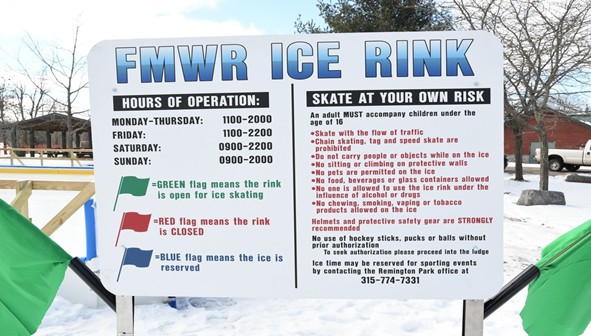
Signage
- Clear and visible signage is essential for communicating important information and ensuring public awareness of rink conditions and availability. Signs should indicate whether the outdoor rink is open or closed, along with the hours of operation. In addition, signage should clearly outline rink rules, highlight potential risks associated with use, and provide a contact number for inquiries, reporting concerns, or booking the ice for private events.
Inspections
- RMA strongly recommends at least two documented inspections daily. The inspection should focus on the safety of the ice surface, the condition of the boards and protective areas, and any potential hazards. Key areas to assess include checking the ice for cracks or holes, inspecting the rink boards for damage or wear and tear, and ensuring adequate lighting for nighttime use. All hazards must be addressed immediately, and access to the rink or affected area should be restricted until the issue is resolved.
Scheduled Maintenance
- Outdoor rinks require constant maintenance due to unpredictable weather, which is the primary factor affecting ice conditions. The ice must be resurfaced daily, using either a Zamboni, small tractor equipped with a shovel, off-road vehicle or snow blowers. During storms, the ice should be cleaned frequently to prevent a thick layer of snow from accumulating on the surface. Because winter temperatures fluctuate, it is important to monitor both temperature and humidity to maintain ideal ice conditions. All maintenance activities must be properly documented.
Weather Availability
- Outdoor rink availability should be determined based on current and forecasted weather conditions to ensure user safety and maintain ice quality. The rink should be closed during extreme cold (temperatures at or below -20°C), heavy snowfall, or freezing rain. Additionally, if temperatures rise above 0°C, the rink should be closed to prevent deterioration of the ice surface.
Safety Requirements
- All individuals under the age of 18 are required to wear a Canadian Standards Association (CSA) approved helmet while on the ice. This applies to both ice skating and hockey activities. While helmet use is not mandatory for individuals over 18, it is strongly encouraged for their safety. Children must be actively supervised by a responsible adult, and the supervisor should remain close and attentive to ensure they can respond quickly in the event of an emergency.
Alcohol Policy
- A strict “No Alcohol” policy must be enforced at all outdoor rinks to promote a safe, respectful, and family-friendly environment. Alcohol consumption and intoxication on the ice significantly increase the risk of serious injury and disruptive behavior. As such, a zero-tolerance approach should be maintained, with clear consequences for any violations.
Assumption of Risk Forms/Hold Harmless Agreements
- An Assumption of Risk Form and Hold Harmless Agreement are legal waivers that require participants to acknowledge and accept the inherent risks associated with skating and playing hockey at outdoor rinks, including the possibility of injury or accidents. By signing these forms, participants agree not to hold the rink owner legally liable. While these documents are effective in transferring risk to the participants, their enforceability may be limited if the rink is knowingly maintained in an unsafe condition.
For more information visit: rmalberta.com or reach out to the Risk team at risk@rmainsurance.com.